Regan Water Notes
Before You Spend $200, Find and Read Your Water Utility Report
Before paying about $200 for a municipal-water test, use this five-minute guide to find your utility report, read the key table, and define the question that remains at your tap.
A municipal tap-water test can cost about $200. Before you buy one, spend five minutes with your utility's free water-quality report. It may answer your question and help you avoid paying for information you already have.
If your home is served by a community water system, the utility provides a Consumer Confidence Report, often called an annual water-quality report or CCR. The report explains where the water comes from, what regulated contaminants were detected during monitoring, whether the system reported violations, and how to contact the utility.
The report is the right first step. It is not the last word on every faucet in every building.
The five-minute version
Find the utility name on your water bill.
Open the newest Consumer Confidence Report for that utility.
Read the detected-contaminant table and the violations section.
Write down the household question the report did not answer.
If the report answers your question, keep the money. If it does not, you now have a specific question to take to the utility, a plumber, a health department, or a testing laboratory.
1. Find the correct water system
Start with the utility name on your water bill. A city name alone may not be enough because neighboring properties can be served by different systems.
If water is included with rent, condominium fees, or association fees, ask the landlord, property manager, or association which water system serves the property.
Then use one of these methods:
Search the utility's website for annual water quality report or Consumer Confidence Report.
Search the web for the utility name, water quality report, and the reporting year.
Use the EPA Consumer Confidence Report page and its report finder.
Call the utility using the number on the bill and ask for the newest report.
2. Confirm the report before relying on it
Check three details near the beginning of the report:
The water system or utility name matches the property.
It is the newest report available.
The reporting period is clear.
The publication year and the year represented by the monitoring data may differ. Community water systems provide the report each year by July 1, but the tables normally summarize monitoring from an earlier period. Read the report's dates instead of assuming every number was collected recently.
If the system name or reporting period is unclear, call the utility before drawing a conclusion.
3. Read the five parts that matter most
Water source
Look for the source of the water, such as groundwater wells, a river, a lake, a reservoir, or water purchased from another system.
This tells you where the utility's water begins. It does not tell you everything that may happen in the service line, building plumbing, fixtures, or treatment equipment at one property.
Detected-contaminant table
This is usually the most technical part of the report. Read one row at a time and identify:
The contaminant name.
The amount or range detected.
The unit of measurement.
The applicable standard, goal, action level, or treatment requirement.
Whether the result was reported as a violation.
A detected substance is not automatically a violation. Use the table's comparison column and the utility's explanation to understand the result.
Standards and goals
Common labels include:
MCL, Maximum Contaminant Level: The highest level of a contaminant allowed in drinking water under the applicable regulation. An MCL is enforceable.
MCLG, Maximum Contaminant Level Goal: A non-enforceable public-health goal set below the level at which no known or expected health risk is identified, with a margin of safety.
AL, Action Level: A concentration that triggers specified treatment or other requirements when the rule's monitoring conditions are met.
TT, Treatment Technique: A required process intended to reduce the level of a contaminant when the rule uses a treatment requirement instead of a numerical MCL.
Use the definitions printed in the report because table layouts and abbreviations can vary.
Violations and corrective action
Look for a section labeled violations, compliance, or important information. If a violation appears, read:
What happened.
How long it occurred.
Whether the utility identified a health risk.
What corrective action the utility reports.
Whether customers were told to do anything.
If the utility or health department has issued a current advisory, follow that instruction. Do not wait for a sales conversation or rely on a general article instead.
Utility contact information
Save the utility's contact number. The utility is the first place to ask about its monitoring, service area, report, or a reported violation. The EPA Drinking Water Hotline is also available at 800-426-4791.
4. Write down the question the report did not answer
A Consumer Confidence Report summarizes water-system monitoring. It is not a laboratory result from your exact faucet at a particular moment.
CDC explains that once water enters the pipes on a property, the utility no longer monitors what may happen in those pipes or water-using devices. That means a system-wide report may not settle a question about a service line, older building plumbing, one fixture, an existing treatment device, or a change that appears only at your property.
After reading the report, ask:
Did the report answer what I wanted to know?
Is my concern about the utility supply or about this property?
Could the issue involve plumbing, a fixture, treatment equipment, taste, odor, or staining?
Do I need an explanation from the utility, an inspection from a plumber, guidance from a health department, or a measured sample from this tap?
If I test, does the panel include the specific item I am asking about?
This step turns a vague worry into a decision.
When testing your own tap may add useful information
A household sample may be worth considering when a specific property-level question remains after you read the report. Examples include a concern about household plumbing, an unexplained change at one tap, or a specific analyte not resolved by the utility report.
Choose a test by the question, the listed analytes, the collection method, and the intended use of the result. Do not choose only by the number of items advertised.
If a lender, regulator, permit office, court, real-estate professional, or other third party requires testing, ask that party which laboratory, method, collection procedure, and chain of custody it will accept before buying anything. An informational mail-in panel is not automatically valid for those purposes.
Pay only for the question that remains
Regan Water would rather help you buy the right information than sell you a test you do not need.
If the utility report answers your question, stop there. If a property-specific question remains, see what CityCheck Basic measures. Review the exact analytes, current price, and shipping requirements before ordering. It is informational testing and may not satisfy a third-party requirement.
Primary references
Municipal-tap baseline
Read the utility report first. Then test the remaining question.
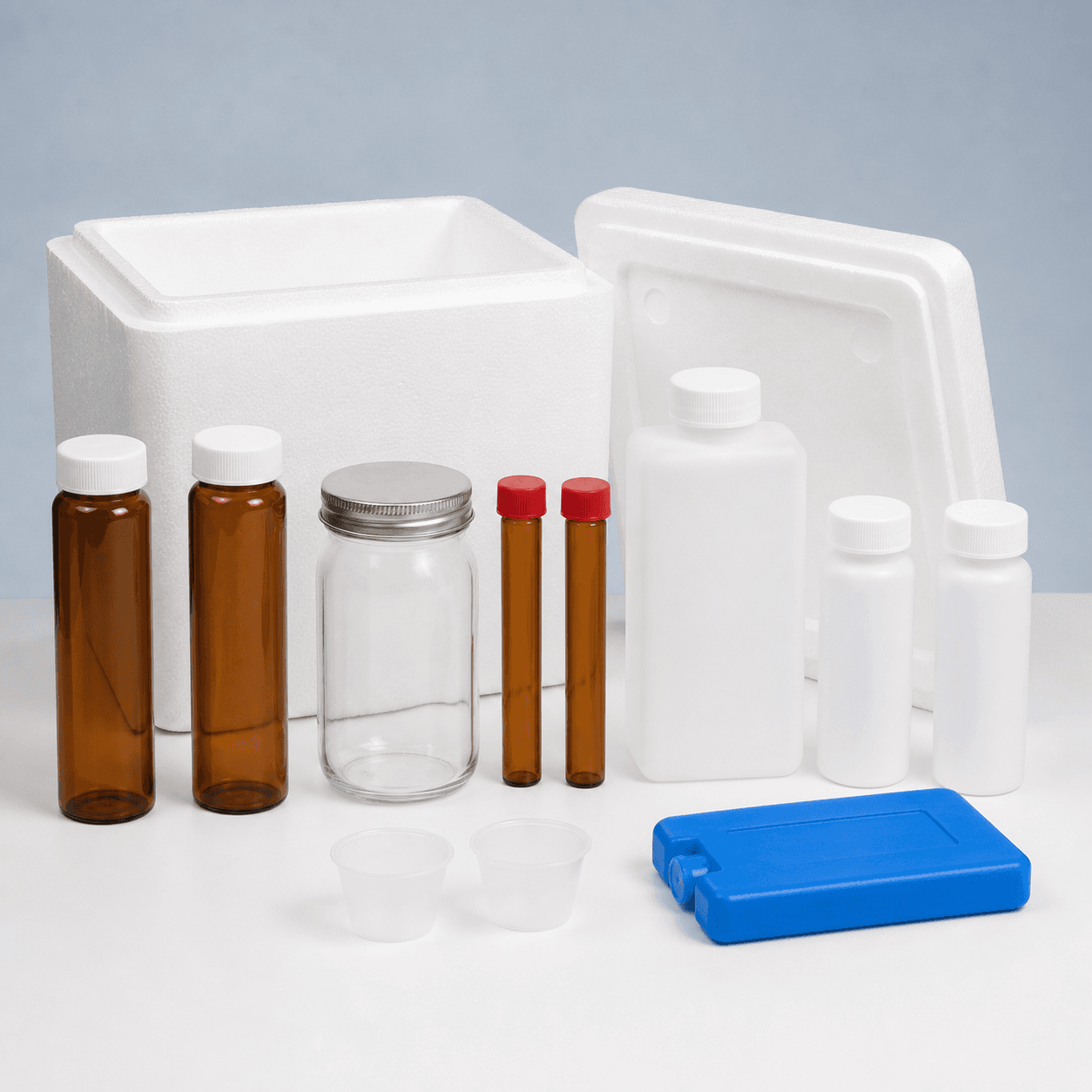
Start with your utility's annual Consumer Confidence Report. If you still have a specific question about water at your tap, CityCheck Basic examines 32 items across metals and minerals, inorganic compounds, physical characteristics, and disinfectants or disinfection byproducts. Review the exact panel before ordering.
 $195.00
Keep reading