
Regan Water Notes
Orange Stains, Black Stains: What Iron and Manganese Mean for Your Water
If your toilet bowl has a reddish-orange ring that scrubbing won't touch, or your dishwasher is leaving black flecks on glasses, it's tempting to blame "old...
If your toilet bowl has a reddish-orange ring that scrubbing won't touch, or your dishwasher is leaving black flecks on glasses, it's tempting to blame "old pipes." Most of the time, the real cause is dissolved iron or manganese — two naturally occurring minerals that behave a lot like hard water's more dramatic cousins. One of them is purely a nuisance. The other comes with a real question worth asking, especially if your water comes from a private well. Where iron and manganese come from Like the calcium and magnesium behind hard water, iron and manganese get into water naturally as it moves through rock and soil. They're especially common in groundwater, which is why private wells run into this far more often than homes on municipal water — public utilities generally treat for it before water reaches your tap, while well water arrives untreated straight from the aquifer. The giveaway is color, and the two minerals stain differently. Iron produces the reddish-orange or rust-colored stains you'll see in sinks, tubs, and toilet bowls, and it can tint water itself a faint yellow after it sits. Manganese produces a black or brownish stain instead, often showing up first in the ice maker or on laundry. It's common to have both at once, since they tend to occur together in groundwater. The staining is aesthetic. The health question isn't automatic — but it's real. The EPA treats iron as a "secondary" standard: a non-enforceable guideline for taste, color, and odor, not a health-based limit. Secondary standards exist because water above them can look, taste, or smell off even though it's still considered safe — the goal is just to flag when most people will notice. For iron, that reference level is 0.3 milligrams per liter (mg/L). Manganese carries the same secondary staining guideline, but its story has another layer. The EPA has also issued a lifetime health advisory of 0.3 mg/L for manganese, and more recent federal guidance points to a stricter number — around 100 micrograms per liter (µg/L, a thousand times smaller than a milligram) — to protect against neurological effects, based on research linking elevated manganese exposure to changes in children's cognitive development. That protection matters most for infants: for babies under six months, health guidance recommends applying the stricter limit even for short-term exposure, since formula mixed with tap water is often a baby's primary source of water. To be clear, this isn't a reason to panic over a black stain. Most homes with visible staining are well below advisory levels. It's a reason to actually test rather than assume the stain is purely cosmetic. Why this matters more if you're on a well Municipal water systems test for both minerals and publish results in an annual Consumer Confidence Report, a summary the EPA requires every public water system to send customers. Private wells aren't covered by EPA rules at all — testing is entirely the homeowner's responsibility, and it's easy to go years without a number. If your household includes a baby, is planning one, or you've simply never had the well tested, iron and manganese are worth adding to the usual bacteria-and-nitrate panel. Getting an actual number A standard water test reports iron and manganese in mg/L or µg/L, and it's a reasonable add-on to any general well panel. Skip guessing from stain color alone — the two minerals often show up together, and the right fix depends on the actual concentration of each, plus details like pH and whether the iron is already oxidized. What actually fixes it For light staining on fixtures, the same trick that works on hard water scale works here: a plain white vinegar soak clears showerheads and faucet aerators. For whole-house treatment, the standard approach is oxidation-filtration — water passes through a filter media (Birm, Greensand, and Filox are common trade names) that converts dissolved iron and manganese into solid particles and strains them out. Depending on how much of each mineral is present and what form it's in, some setups need a pre-oxidation step first, using air, chlorine, or potassium permanganate. Installed cost for a typical whole-house iron/manganese filter runs roughly $1,500 to $3,000, similar in scope to a water softener install. A conventional softener can knock down moderate iron and manganese as a side effect of removing hardness, but it isn't built for either mineral specifically and tends to struggle once levels climb. Get a number before you buy equipment. The right fix depends on how much iron and manganese are actually in your water — and that's a quick test, not a guess from the color of your sink. Sources EPA: Secondary Drinking Water Standards: Guidance for Nuisance Chemicals — https://www.epa.gov/sdwa/secondary-drinking-water-standards-guidance-nuisance-chemicals EPA: Drinking Water Health Advisory for Manganese — https://www.epa.gov/sites/default/files/2014-09/documents/support_cc1_magnese_dwreport_0.pdf USGS: Hardness of Water (mineral geology background) — https://www.usgs.gov/water-science-school/science/hardness-water
Stains, taste, or odor
Replace the stain-color guess with measurements.
Stain color is a clue, not a diagnosis. Problem Check examines 20 nuisance-water parameters, including total iron, dissolved iron, and iron bacteria, plus chemistry associated with taste, odor, and discoloration. The report can inform the next decision, but it does not prescribe a complete treatment system.
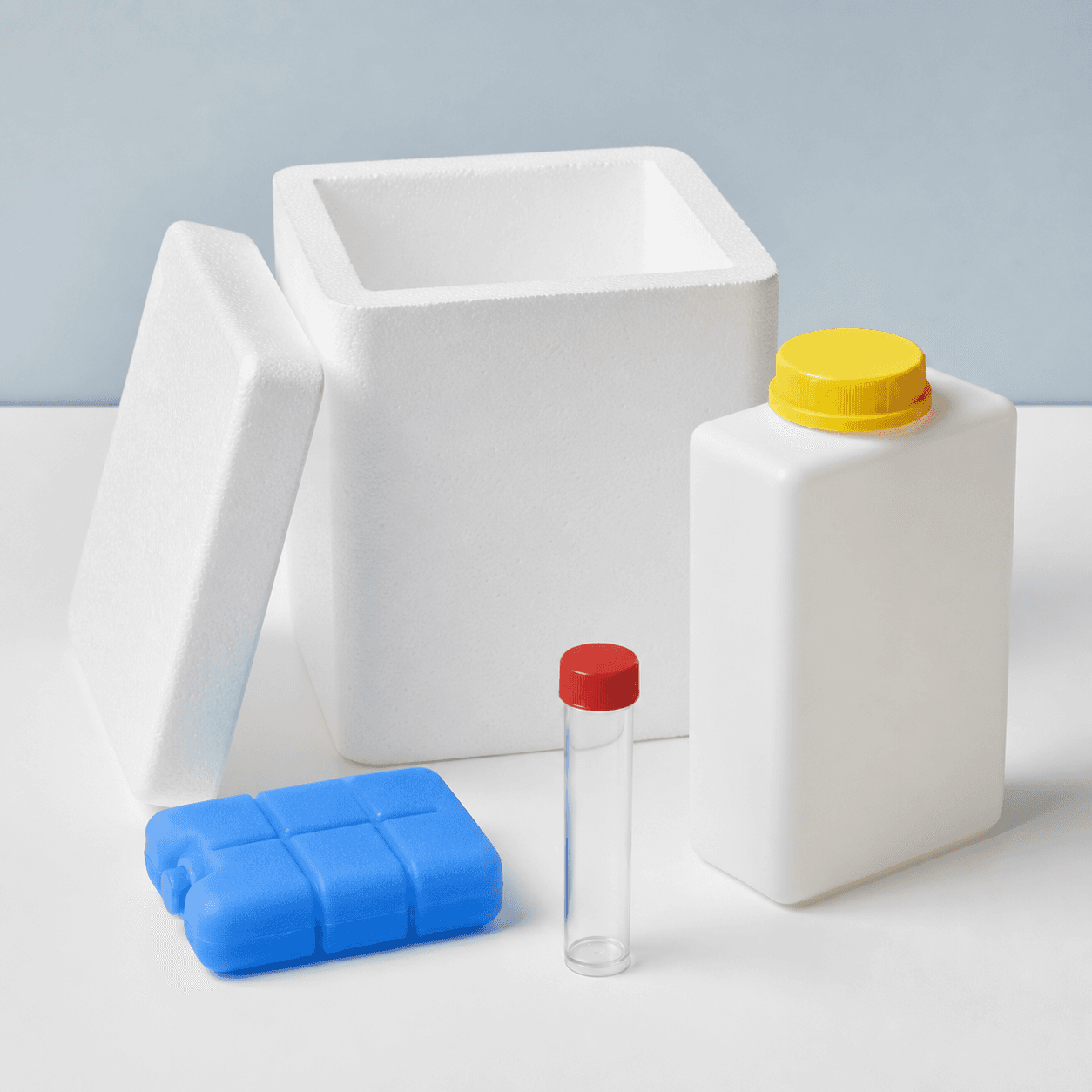 $195.00
Keep reading